


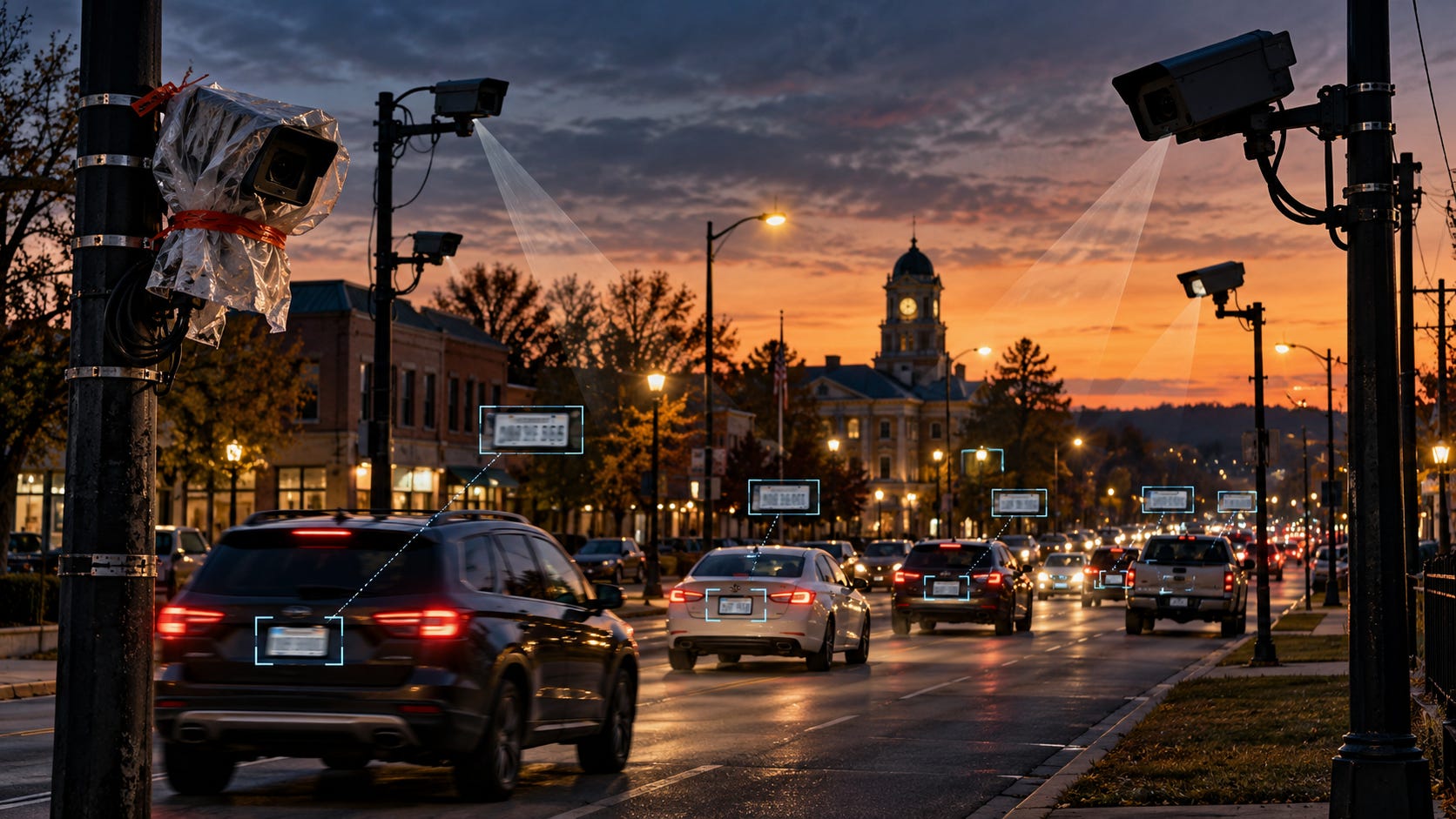
In early October 2026, local officials in St. Lucie County, Florida, set out to decommission automated license plate recognition (ALPR) cameras following a decision to end their contract with Flock Safety. Expecting to audit a pre-approved inventory of 52 devices, county workers uncovered something startling: 66 cameras were actually installed along local rights-of-way.
Fourteen of these devices had been mounted without any county permits or authorization. While the St. Lucie County Sheriff’s Office eventually claimed three of the unaccounted for units leaving unexplained why they were installed without permits in the first place 11 cameras remained entirely unclaimed. Neither municipal police nor local agencies took responsibility for them. County workers were forced to cover the anonymous lenses in plastic and post removal notices, but by the time reporters visited one location in Fort Pierce, the mystery camera had already been quietly removed by unknown hands.
This incident is not an isolated glitch; it is a warning sign. When physical surveillance equipment can be erected on public property without oversight, ownership records, or accountability, it highlights a profound flaw in modern surveillance proliferation: once we accept pervasive tracking as routine, we lose control over who is watching.
Shadow Networks and Historical Echoes
The mystery in Florida strongly echoes an espionage enigma uncovered nearly a decade ago in Washington, D.C. In 2017, federal reviews revealed the presence of dozens of rogue StingRays-cell-site simulators capable of intercepting mobile phone traffic, tracking location data, and harvesting metadata operating across the U.S. capital. The operators of those devices were never publicly identified, though foreign intelligence agencies were widely suspected.
There is, however, an important distinction between the StingRay incident and St. Lucie County’s phantom Flock cameras:
In the StingRay case, operating rogue cellular interceptors required sophisticated, high cost equipment likely deployed by foreign state actors or intelligence operatives seeking sensitive political communications.
In the Flock camera case, installing a physical solar powered camera is vastly simpler, but far less discreet. The most plausible explanation for the unauthorized Flock units is administrative breakdown of local government agencies, private homeowner associations (HOAs), or adjacent jurisdictions installing hardware without navigating the tedious bureaucratic permitting process.
As a matter of practical strategy, a foreign intelligence service intent on tracking vehicle movements in the United States would unlikely risk installing physical, unpermitted hardware on a public roadside pole. Doing so leaves physical evidence subject to routine maintenance checks or public discovery. Instead, state-sponsored adversaries are much more likely to exploit existing software networks.
This tactic was demonstrated when Israeli cyber operations famously compromised Tehran’s traffic camera networks, repurposing municipal infrastructure for intelligence gathering. Hacking into a centralized, cloud connected surveillance database like Flock’s gives an adversary access to millions of vehicle logs nationwide without risking a single physical detection.
The Real Threat: Institutional Drift and Lack of Visibility
Whether the 11 ghost cameras in St. Lucie County belonged to an overzealous agency bypassing local zoning laws or an overreach by private entities, the implications are equally troubling. The core problem is institutional drift the rapid expansion of tracking infrastructure without elementary asset management, access controls, or legal authorization.
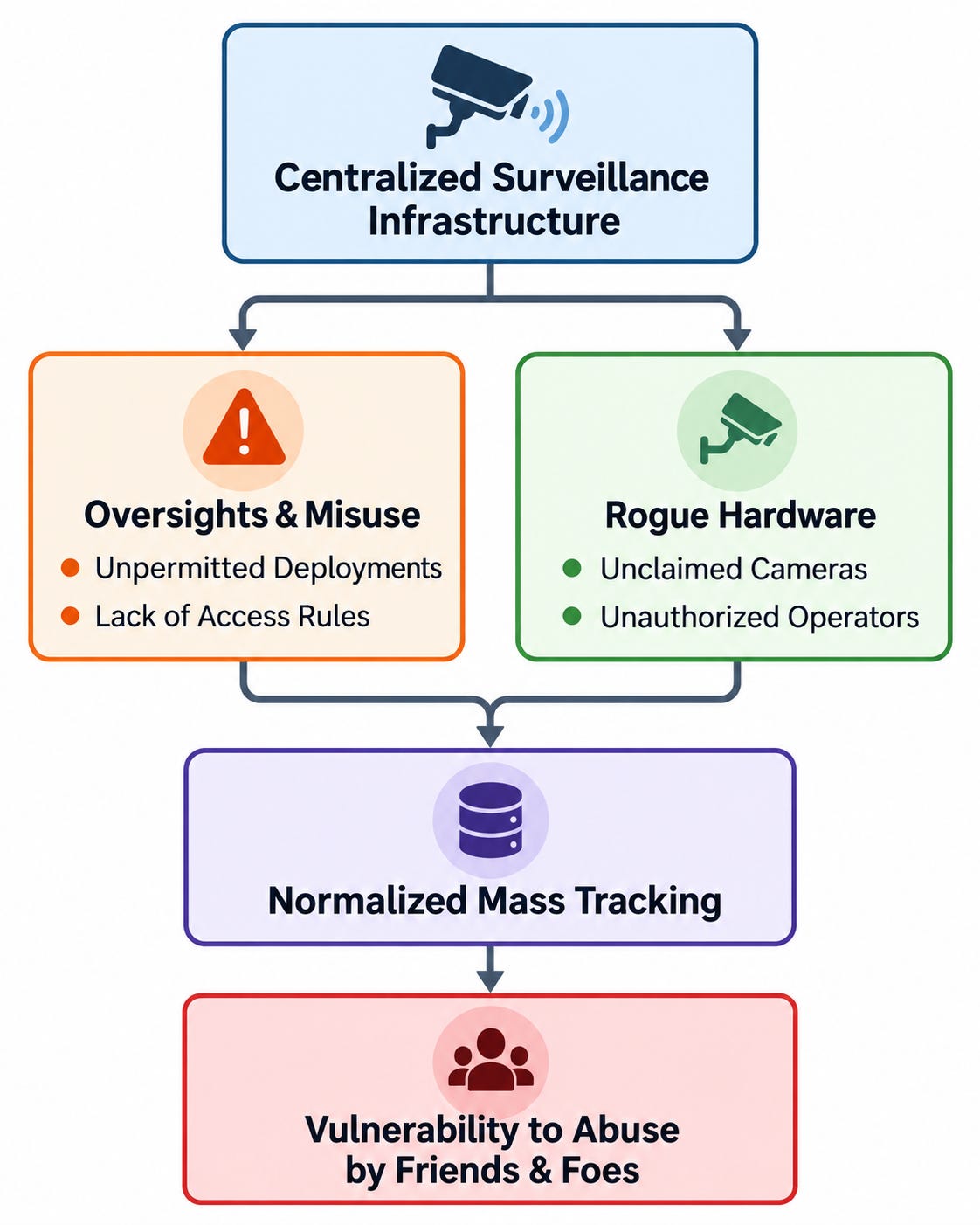
When local authorities do not even know how many cameras sit on their public roads let alone who controls the feeds or where the harvested data flows the system fails basic security principles:
Unregulated Access: Without clear ownership, there is no way to verify who has access to real time location logs, how long data is retained, or whether it is shared with third parties.
Precedent for Misuse: Incidents across the country have shown ALPR databases being accessed for unauthorized personal tracking or unconstitutional searches without warrants.
Physical Vulnerability: Physical hardware on public land that isn’t mapped by municipal IT or public safety teams provides perfect cover for rogue devices.
The Danger of Normalizing Mass Surveillance
The rapid adoption of automated license plate readers has transformed routine streetscapes into continuous tracking grids. Devices made by vendors like Flock Safety capture details of millions of everyday drivers, mapping daily commutes, medical visits, religious gatherings, and personal routines.
When surveillance becomes background noise, communities stop asking fundamental questions: Who installed this? Who owns the data? What legal authority permits this capture?
“Regardless of who put those 11 cameras on the roadside, once we normalize a surveillance infrastructure, both friends and foes will take advantage of it.”
By allowing hardware to proliferate without strict governance, transparency, and auditing, society builds the infrastructure for its own tracking. Whether those systems are exploited by state actors, rogue law enforcement officers, commercial data brokers, or unauthorized local entities, the end result is identical: an erosion of public privacy and civil liberties under the guise of public safety.
The revelation in St. Lucie County serves as a wake up call. If local governments cannot account for the cameras mounted on their own street poles, it is time to halt the expansion of automated surveillance until meaningful oversight, public accountability, and physical inventory controls are restored.
If you discovered an unauthorized surveillance camera monitoring your neighborhood street, would you trust local authorities to investigate it or would you demand the immediate removal of all automated tracking in your community?